Blog

  • Living Well with Breath

    Living with chronic breathing difficulties requires smart daily management to maintain your quality of life. Mastering proper breathing techniques forms the foundation of effective symptom control. Practice pursed-lip breathing regularly: inhale slowly through your nose for two counts, then exhale gently through pursed lips for four counts. This method helps keep airways open longer and makes breathing more efficient. Combine this with diaphragmatic breathing, focusing on making your abdomen rise as you inhale, which strengthens your primary breathing muscle. These techniques are particularly helpful during physical activities or when you feel short of breath.

    Nutrition plays a vital role in supporting your respiratory health. Choose nutrient-dense foods that provide substantial energy without causing bloating. Eat smaller, more frequent meals – five to six small meals instead of three large ones – to prevent abdominal pressure on your diaphragm. Include lean proteins like fish and poultry to maintain respiratory muscle strength, along with whole grains and colorful fruits and vegetables. Stay adequately hydrated unless your doctor advises otherwise, as proper fluid intake helps keep mucus thin and easier to clear from your airways.

    Stay active while practicing energy conservation. Engage in regular moderate exercise like walking, but pace yourself throughout the day. Plan activities strategically, scheduling demanding tasks for when you have peak energy. Use sitting positions for daily tasks and consider using adaptive equipment like shower chairs. Keep frequently used items within easy reach to minimize unnecessary exertion. Create a lung-friendly environment by avoiding smoke and strong fumes, using air purifiers at home, and checking air quality reports before outdoor activities. These practical strategies, combined with proper medication adherence, can significantly improve your daily comfort and help you maintain an active lifestyle.
  •  Nourish Your Breathing Body

    Proper nutrition provides essential support for managing breathing challenges. Your breathing muscles require adequate fuel to work efficiently, making smart food choices crucial. Focus on nutrient-dense foods that provide maximum nutrition without excessive volume. Include lean proteins like fish, poultry, eggs, and legumes to maintain respiratory muscle strength. Incorporate whole grains and colorful fruits and vegetables for essential vitamins and sustained energy that supports your breathing efforts.

    Eating patterns matter significantly for comfortable breathing. Large meals can push against your diaphragm, making breathing more difficult. Instead, consume five to six smaller meals spaced evenly throughout the day. Choose foods that are easy to chew and digest to avoid overtaxing your system. Start your day with a nutrient-rich breakfast like oatmeal with Greek yogurt, enjoy a mid-morning snack of banana with peanut butter, and have a light chicken salad for lunch. Keep evening meals small and early to prevent breathing discomfort that can interfere with sleep.

    Stay adequately hydrated unless your doctor recommends fluid restrictions. Proper hydration helps maintain thin mucus consistency, making it easier to clear from your airways. If drinking large amounts of water is challenging, try sipping small amounts consistently throughout the day. Warm fluids like herbal tea or broth can be particularly soothing. Include high-calorie, nutrient-rich foods if weight maintenance is a concern, and always consult with your healthcare provider about any significant dietary changes. These nutritional strategies work together to support your breathing health and overall well-being.

  •  Breathe Well, Live Well

    Living with chronic breathing challenges requires smart strategies that help you manage daily activities while maintaining your quality of life. One of the most effective approaches is learning proper breathing techniques that can be used throughout your day. Practice pursed-lip breathing regularly – inhale slowly through your nose for two counts, then exhale gently through pursed lips for four counts. This simple method helps keep your airways open longer and makes breathing more efficient. Combine this with belly breathing, focusing on making your abdomen rise as you inhale, which strengthens your main breathing muscle.

    Staying active is equally important, though it requires careful planning. Choose gentle exercises like walking or stationary cycling, starting with short sessions and gradually increasing duration. The best time for physical activity is when you feel most energetic, typically in the late morning. Always pace yourself and take rest breaks as needed. Remember to coordinate your breathing with movement – exhale during the most strenuous part of any activity. Listen to your body’s signals and stop if you feel dizzy or overly short of breath.

    Create a lung-friendly environment by avoiding smoke, strong fumes, and air pollution. Monitor local air quality reports and stay indoors when pollution levels are high. Use air purifiers in your main living areas and always practice good hand hygiene to prevent respiratory infections. Organize your home to minimize unnecessary movement – keep frequently used items within easy reach and use labor-saving devices like wheeled carts. These practical strategies, combined with proper medication management, can help you breathe easier and stay active in your daily life.

  • The Slow Fade of Breath

    Living with chronic breathing challenges requires smart daily strategies. Start with proper breathing techniques that help manage shortness of breath. Practice pursed-lip breathing by inhaling through your nose for two counts, then exhaling slowly through pursed lips for four counts. This method keeps airways open longer and helps release trapped air. Combine this with diaphragmatic breathing – place one hand on your chest and the other on your stomach, breathing deeply to make your stomach rise more than your chest. Practice these techniques for 5-10 minutes daily to build stronger breathing muscles.

    Nutrition plays a crucial role in supporting your respiratory health. Choose foods that provide maximum energy without causing bloating or gas. Eat smaller meals more frequently – five to six small meals instead of three large ones – to prevent pressure on your diaphragm. Focus on lean proteins like fish and poultry, whole grains, and fresh fruits and vegetables. Stay well-hydrated unless your doctor advises otherwise, as proper hydration helps keep mucus thin and easier to clear from your airways. Include high-calorie, nutrient-dense foods if weight maintenance is a concern.

    Stay active while conserving energy. Engage in regular moderate exercise like walking or stationary cycling, but pace yourself throughout the day. Plan activities strategically, scheduling demanding tasks for when you have the most energy. Use sitting positions for tasks like cooking and dressing, and consider using a shower chair. Keep frequently used items within easy reach to minimize unnecessary movement. Most importantly, avoid lung irritants including smoke, strong chemical fumes, and air pollution. Use air purifiers at home and check air quality reports before going outside. These practical steps can significantly improve your daily comfort and quality of life.

  • A Life With Shortened Breath

    Living with chronic breathing challenges requires smart daily strategies. Start with proper breathing techniques that help manage shortness of breath. Practice pursed-lip breathing by inhaling through your nose for two counts, then exhaling slowly through pursed lips for four counts. This method keeps airways open longer and helps release trapped air. Combine this with diaphragmatic breathing – place one hand on your chest and the other on your stomach, breathing deeply to make your stomach rise more than your chest. Practice these techniques for 5-10 minutes daily to build stronger breathing muscles.

    Nutrition plays a crucial role in supporting your respiratory health. Choose foods that provide maximum energy without causing bloating or gas. Eat smaller meals more frequently – five to six small meals instead of three large ones – to prevent pressure on your diaphragm. Focus on lean proteins like fish and poultry, whole grains, and fresh fruits and vegetables. Stay well-hydrated unless your doctor advises otherwise, as proper hydration helps keep mucus thin and easier to clear from your airways. Include high-calorie, nutrient-dense foods if weight maintenance is a concern.

    Stay active while conserving energy. Engage in regular moderate exercise like walking or stationary cycling, but pace yourself throughout the day. Plan activities strategically, scheduling demanding tasks for when you have the most energy. Use sitting positions for tasks like cooking and dressing, and consider using a shower chair. Keep frequently used items within easy reach to minimize unnecessary movement. Most importantly, avoid lung irritants including smoke, strong chemical fumes, and air pollution. Use air purifiers at home and check air quality reports before going outside. These practical steps can significantly improve your daily comfort and quality of life.

  • Breathe Better Daily

    Living with chronic breathing challenges requires smart daily strategies. Start with proper breathing techniques that help manage shortness of breath. Practice pursed-lip breathing by inhaling through your nose for two counts, then exhaling slowly through pursed lips for four counts. This method keeps airways open longer and helps release trapped air. Combine this with diaphragmatic breathing – place one hand on your chest and the other on your stomach, breathing deeply to make your stomach rise more than your chest. Practice these techniques for 5-10 minutes daily to build stronger breathing muscles.

    Nutrition plays a crucial role in supporting your respiratory health. Choose foods that provide maximum energy without causing bloating or gas. Eat smaller meals more frequently – five to six small meals instead of three large ones – to prevent pressure on your diaphragm. Focus on lean proteins like fish and poultry, whole grains, and fresh fruits and vegetables. Stay well-hydrated unless your doctor advises otherwise, as proper hydration helps keep mucus thin and easier to clear from your airways. Include high-calorie, nutrient-dense foods if weight maintenance is a concern.

    Stay active while conserving energy. Engage in regular moderate exercise like walking or stationary cycling, but pace yourself throughout the day. Plan activities strategically, scheduling demanding tasks for when you have the most energy. Use sitting positions for tasks like cooking and dressing, and consider using a shower chair. Keep frequently used items within easy reach to minimize unnecessary movement. Most importantly, avoid lung irritants including smoke, strong chemical fumes, and air pollution. Use air purifiers at home and check air quality reports before going outside. These practical steps can significantly improve your daily comfort and quality of life.

  • When Every Breath Is Work

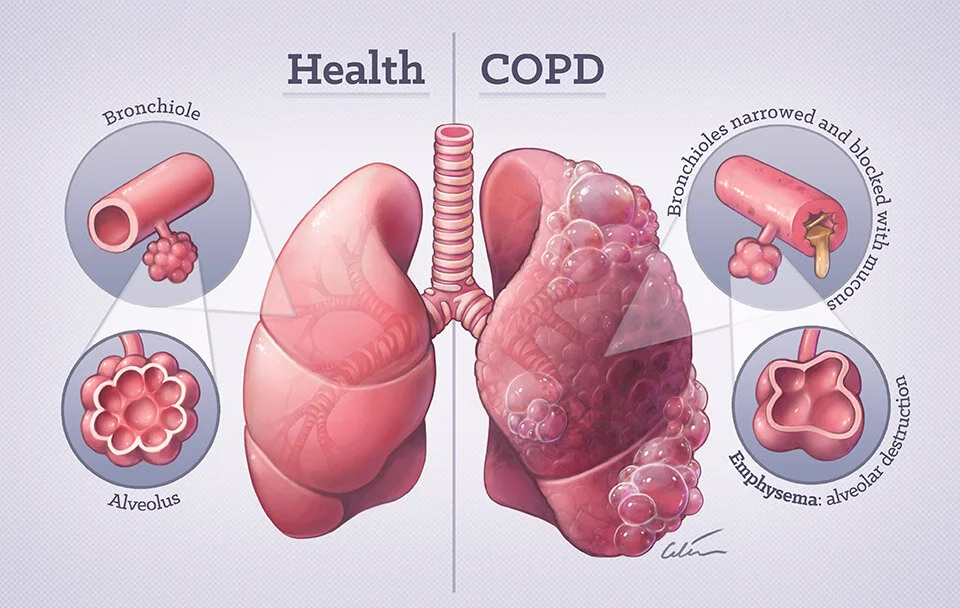
    Living with COPD presents daily challenges, but proper breathing techniques can significantly improve your quality of life. Start by mastering pursed-lip breathing: inhale slowly through your nose for two counts, then exhale gently through pursed lips for four counts. This simple method helps keep airways open longer and reduces shortness of breath. Practice this technique regularly throughout the day – while resting, during activities, and especially when you feel breathless.

    Staying active is equally important for managing COPD symptoms. Begin with gentle exercises like short walks, gradually increasing duration as your endurance improves. The best time for physical activity is when you feel most energetic, typically in late morning. Always listen to your body and take rest breaks when needed. Remember to coordinate your breathing with movement – exhale during the most strenuous part of any activity, such as standing up or lifting objects.

    Create a lung-friendly environment by avoiding smoke, strong fumes, and air pollution. Monitor local air quality reports and stay indoors when pollution levels are high. Use air purifiers in your main living spaces and maintain good hand hygiene to prevent respiratory infections. These practical strategies, combined with proper medication management, can help you breathe easier and maintain an active lifestyle despite COPD.

  • The Breath That Was Stolen

    Living with COPD presents daily challenges, but proper breathing techniques can significantly improve your quality of life. Start by mastering pursed-lip breathing: inhale slowly through your nose for two counts, then exhale gently through pursed lips for four counts. This simple method helps keep airways open longer and reduces shortness of breath. Practice this technique regularly throughout the day – while resting, during activities, and especially when you feel breathless.

    Staying active is equally important for managing COPD symptoms. Begin with gentle exercises like short walks, gradually increasing duration as your endurance improves. The best time for physical activity is when you feel most energetic, typically in late morning. Always listen to your body and take rest breaks when needed. Remember to coordinate your breathing with movement – exhale during the most strenuous part of any activity, such as standing up or lifting objects.

    Create a lung-friendly environment by avoiding smoke, strong fumes, and air pollution. Monitor local air quality reports and stay indoors when pollution levels are high. Use air purifiers in your main living spaces and maintain good hand hygiene to prevent respiratory infections. These practical strategies, combined with proper medication management, can help you breathe easier and maintain an active lifestyle despite COPD.

  • Breathe Easy, Live Better

    Living with COPD presents daily challenges, but proper breathing techniques can significantly improve your quality of life. Start by mastering pursed-lip breathing: inhale slowly through your nose for two counts, then exhale gently through pursed lips for four counts. This simple method helps keep airways open longer and reduces shortness of breath. Practice this technique regularly throughout the day – while resting, during activities, and especially when you feel breathless.

    Staying active is equally important for managing COPD symptoms. Begin with gentle exercises like short walks, gradually increasing duration as your endurance improves. The best time for physical activity is when you feel most energetic, typically in late morning. Always listen to your body and take rest breaks when needed. Remember to coordinate your breathing with movement – exhale during the most strenuous part of any activity, such as standing up or lifting objects.

    Create a lung-friendly environment by avoiding smoke, strong fumes, and air pollution. Monitor local air quality reports and stay indoors when pollution levels are high. Use air purifiers in your main living spaces and maintain good hand hygiene to prevent respiratory infections. These practical strategies, combined with proper medication management, can help you breathe easier and maintain an active lifestyle despite COPD.

  • Conserve Energy, Stay Active

    Energy conservation is key to living well with COPD. Learn to pace yourself throughout the day. Plan your activities and spread demanding tasks over several days. Break large jobs into smaller steps, taking rest breaks between tasks. For example, instead of cleaning the entire house in one day, clean one room each day. Sit whenever possible while working – use a stool in the kitchen, sit while dressing, and consider a shower chair for bathing.

    Organize your home to make daily tasks easier. Keep frequently used items within easy reach. Wear clothes that are simple to put on – choose items with zippers instead of buttons, slip-on shoes instead of lace-ups. Use labor-saving devices like a wheeled cart for carrying items around the house, and ask for help with heavy lifting. Plan your day around your energy levels, scheduling important tasks for when you typically feel your best.

    Stay active while respecting your limits. Gentle exercises like stretching or chair yoga can maintain flexibility without overtaxing your breathing. When climbing stairs, go slowly and use the handrail. Rest partway up if needed. Remember to use your breathing techniques during all activities. By planning ahead and working smartly, you can accomplish what matters most while conserving energy for the activities you enjoy. These strategies help you maintain independence and quality of life while managing COPD.